Journal · October 2026 · 4 min read
The Ingredients That Matter
Damask rose, sandalwood, vetiver, vanilla — a few materials carry a fragrance. Why we choose them, where they come from, and what they do on skin.
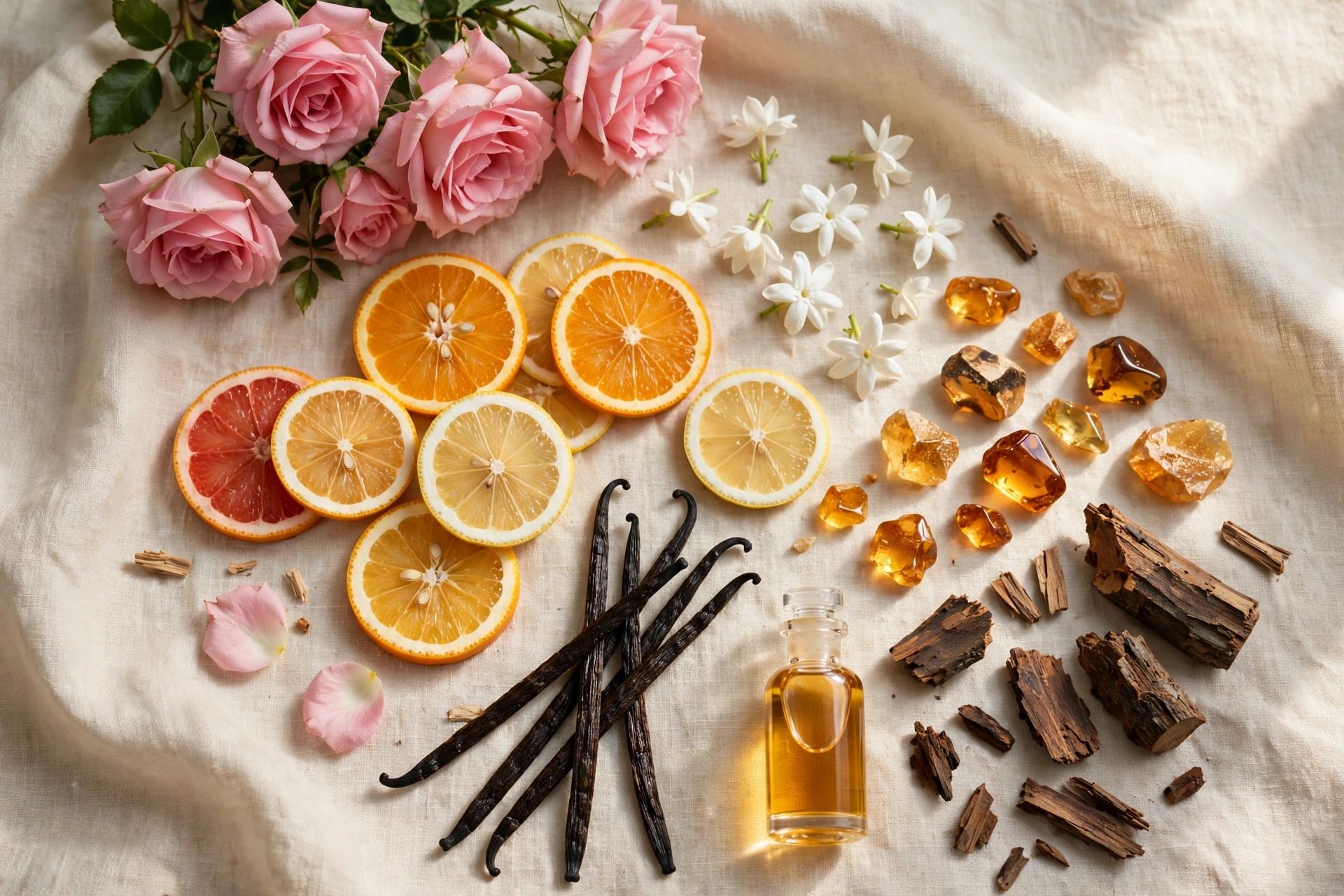
A perfume is only as good as its raw materials. No amount of blending can rescue a flat rose or a thin sandalwood, so the house spends more time choosing ingredients than it does on almost anything else.
Damask rose arrives from fields that are picked before sunrise, while the petals are still cool and their scent is at its fullest. It takes thousands of blooms to make a single kilo of rose absolute — which is why a rose fragrance that smells like a real rose costs what it does.
Sandalwood is the quiet backbone of the woody scents. The creamy, soft wood we use is aged before it is distilled, and it is what gives Santal Doré its long, smooth dry-down rather than a sharp, woody edge.
Vetiver and vetiver’s cousins — the smoky, grassy roots — do the opposite job: they anchor a scent and keep it from floating away. In Citrus Noir, vetiver is what the bright bergamot settles into as the day goes on.
Vanilla is the most misunderstood ingredient in perfumery. The vanilla in Vanille Noir is dark and resinous, closer to rum and smoke than to cake — a reminder that a single material can be warm without ever being sweet.
None of this is decoration. When you wear a Lumière fragrance, what you are mostly smelling is the quality of these few materials, and the time it took to let them speak.